On Sale Now!
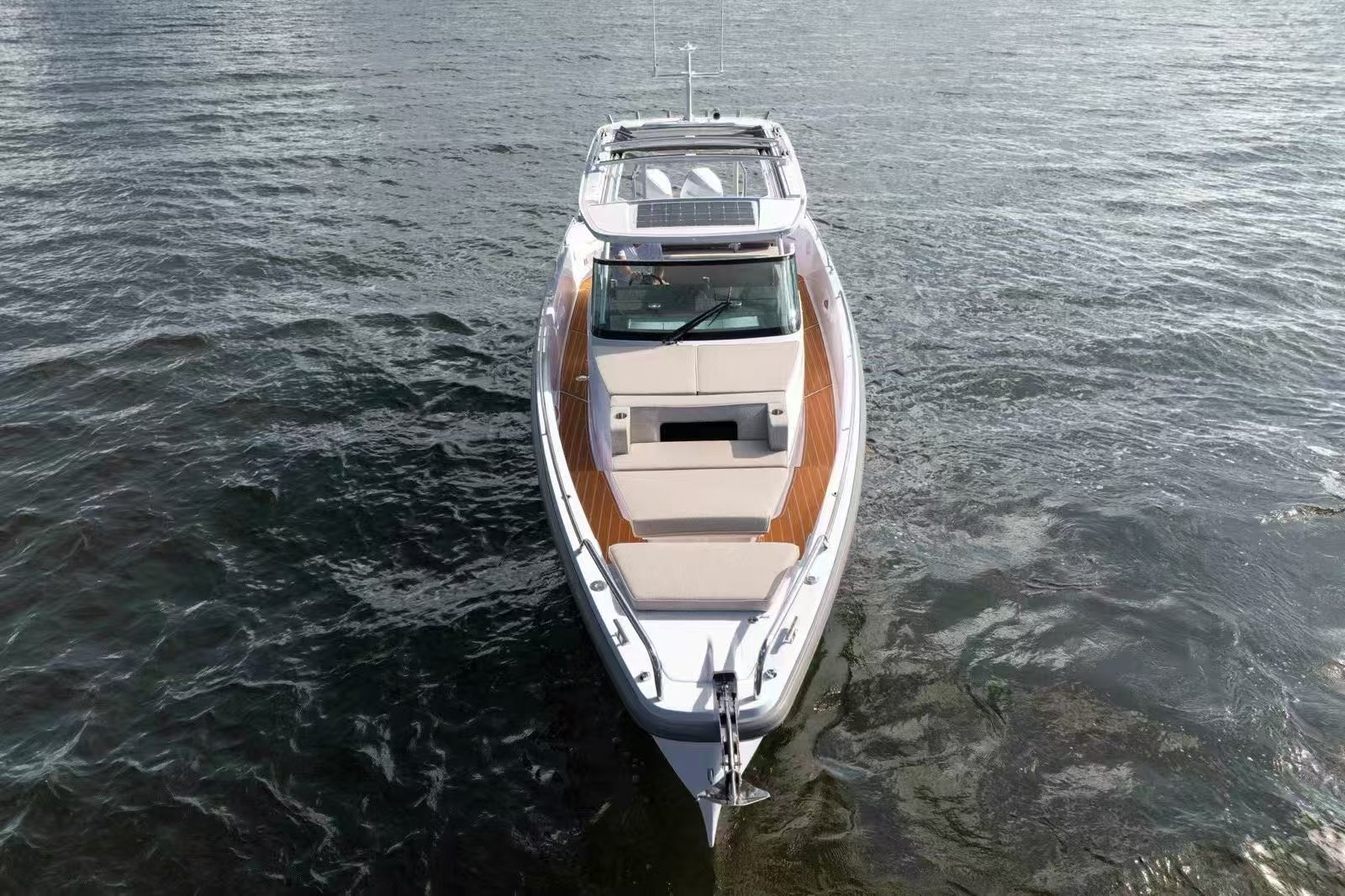
EVA boat flooring, with its advantages of being lightweight, waterproof, wear-resistant, and comfortable underfoot, has long replaced traditional wood and rubber flooring, becoming the preferred material for boat owners. Unlike ordinary flooring, the marine environment is unique, with seawater erosion, slippery conditions, and constant sun exposure being commonplace. Therefore, when choosing EVA boat flooring, aesthetics should not be the only consideration; slip resistance and compatibility with the boat’s shape are also crucial. Mastering the core logic of “determining the texture first, then choosing the pattern,” and then filtering based on aesthetics, slip resistance, and boat shape compatibility, will allow you to easily select EVA boat flooring suitable for your boat.
Step 1: Determining the Texture—The Foundation of Slip Resistance and Quality
The texture of EVA boat flooring directly determines its slip resistance and basic quality. Currently, EVA boat flooring textures are mainly divided into two categories: brushed textures and embossed textures. These two differ significantly in structure and slip resistance, and are suitable for different usage scenarios.


1. Brushed Texture: Linear shallow grooves, delicate texture
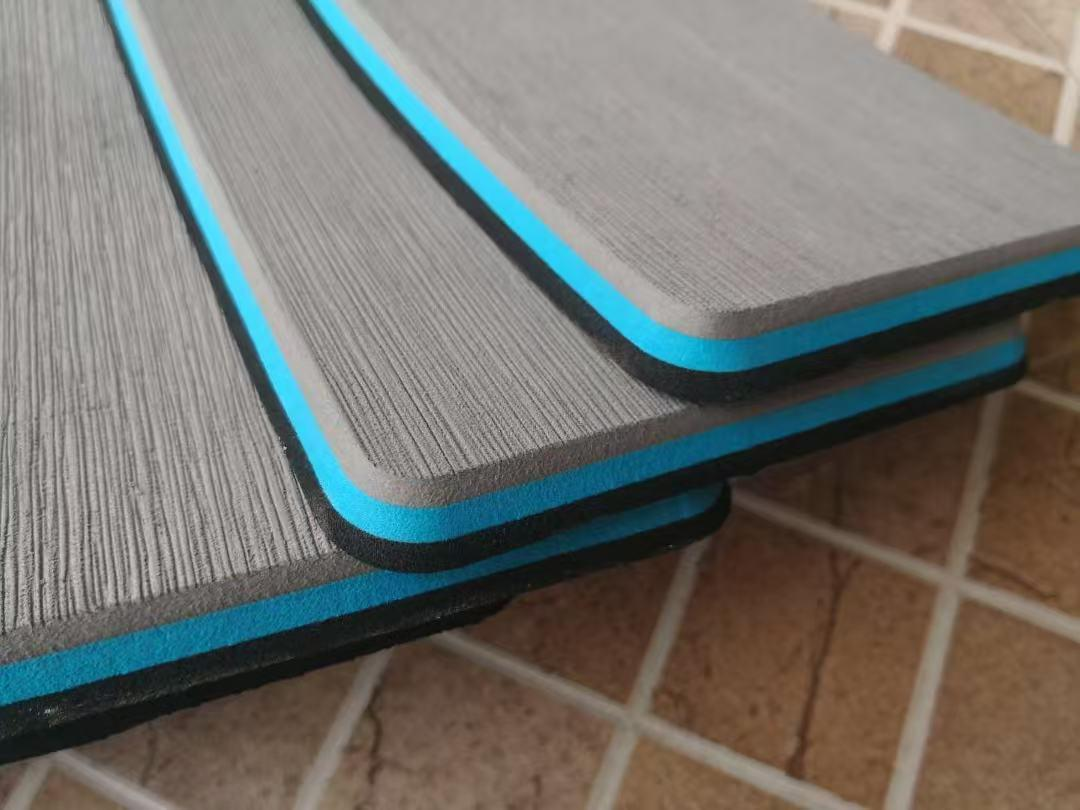
The brushed texture is created by a special process that draws fine, uniform parallel lines onto the surface of EVA sheets. The lines are shallow, resulting in a smooth, delicate surface with no noticeable unevenness, presenting a simple yet sophisticated feel. As the most basic and classic texture in EVA boat flooring, its core advantages are high quality, easy cleaning, and basic anti-slip performance.
2. Embossed Texture: Distinct relief, ultimate anti-slip, suitable for complex scenarios
Embossed texture is created by pressing a mold onto the surface of EVA board, forming uneven lines with greater depth. Common embossing styles include granular texture, stripes, and grid patterns, providing stronger friction. Compared to brushed texture, embossed texture focuses more on anti-slip performance, adapting to complex scenarios such as seawater immersion and frequent foot traffic.
Step 2: Choosing a Pattern – Aesthetic Upgrade, Matching Boat Shape and Personal Preferences
After determining the texture, you can choose a suitable pattern based on the boat type, personal preferences, and usage scenario. EVA boat flooring offers a rich variety of patterns, with mainstream patterns including faux teak, diamond, fish scale, and hexagonal, each emphasizing different aspects of aesthetics, adaptability, and practicality.
1. Faux Teak Pattern: Classic and High-End, Suitable for Multiple Boat Types
The faux teak pattern is the most popular pattern among EVA boat flooring, using a simulation process to reproduce the texture and color of natural teak. It possesses the high-end texture of natural wood while avoiding the drawbacks of natural teak such as rot, warping, and difficulty in maintenance. It is the preferred pattern for “both aesthetics and practicality,” suitable for almost all boat types.
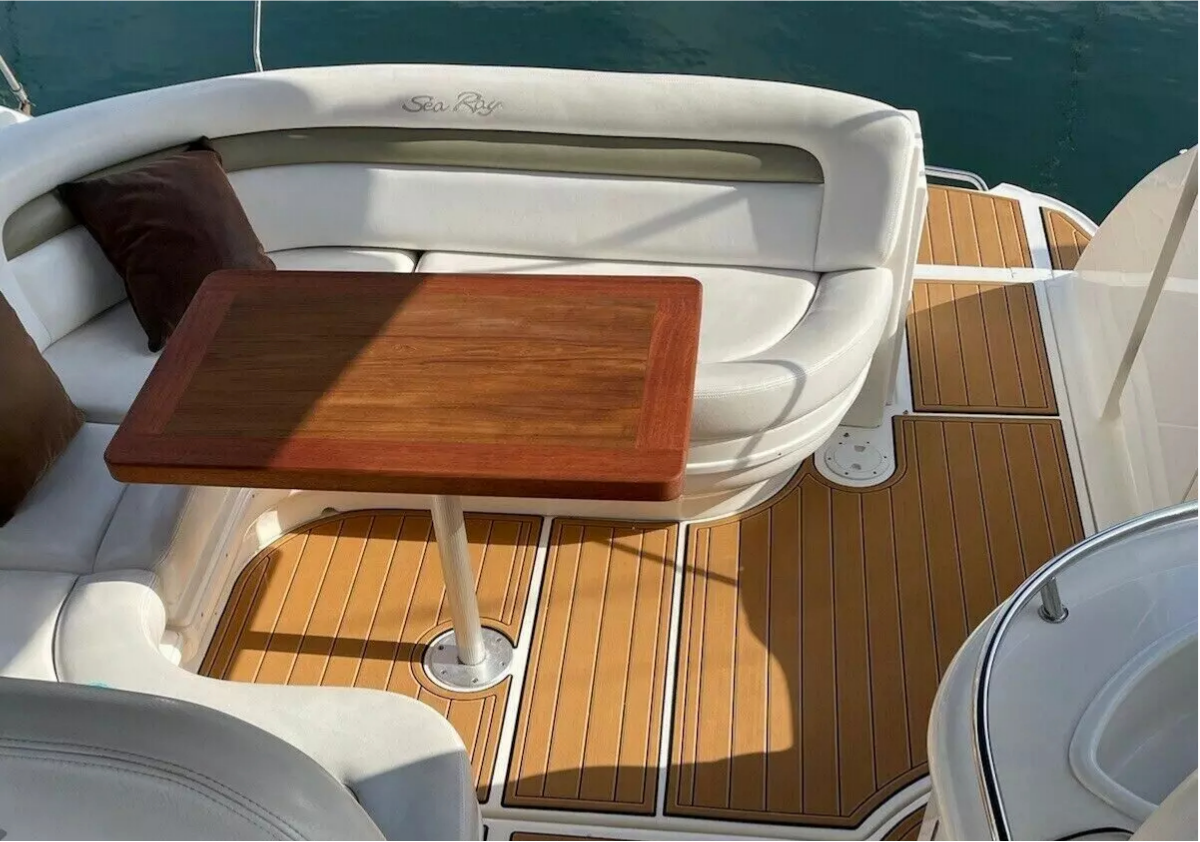
Aesthetics: High-end and sophisticated, with outstanding texture, it perfectly reproduces the delicate grain and warm color of natural teak. Whether light or dark teak, it enhances the texture and style of the boat’s interior.
Anti-slip effect: The faux teak pattern itself does not affect the anti-slip effect. When paired with a brushed texture, it’s suitable for leisure areas, providing basic anti-slip properties; when paired with an embossed texture, it’s suitable for deck areas, offering ultimate anti-slip performance. Flexible combinations are possible depending on the usage scenario.
Compatible boat types: Universally compatible, perfectly fitting yachts, fishing boats, speedboats, and small recreational boats. Especially suitable for boat owners who value a high-end feel, significantly enhancing the interior’s quality after installation.
2. Diamond Pattern: Simple and clean, upgraded anti-slip performance
The diamond pattern is a regular pattern formed by geometric splicing. The lines are clean, simple, and sophisticated, with a strong three-dimensional effect. The concave design of the diamonds also aids in drainage, further enhancing anti-slip performance, making it the preferred pattern for sporty boats.
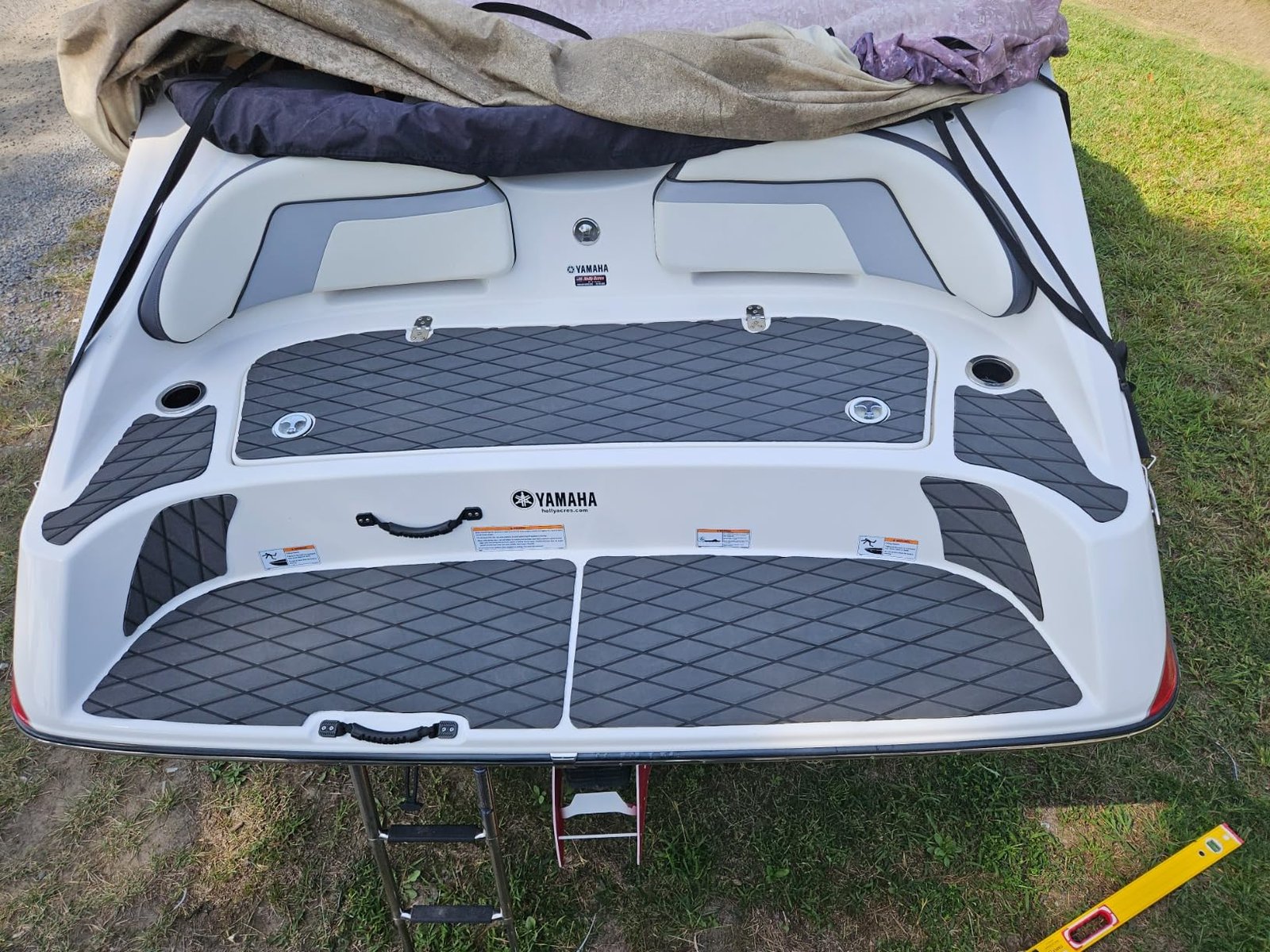
Aesthetics: Simple and clean, with strong lines, flexible color combinations. Single-color diamonds and two-tone diamond patterns (such as dark gray + light gray, black + blue) can be chosen, highlighting individuality without appearing cluttered, perfectly matching the overall style of sporty boats.
Anti-slip effect: Superior anti-slip performance compared to ordinary flat patterns; the diamond-shaped concave design enhances friction. When paired with embossed textures, the anti-slip effect is doubled; when paired with brushed textures, it further improves the user experience on top of basic anti-slip properties.
Suitable boat types: More suitable for speedboats, inflatable boats, lure boats, sports yachts, and other boat types that emphasize sportiness and practicality.
3. Fish scale pattern: Stylish and unique, suitable for leisure boats
The fish scale pattern is created by piecing together the shape of fish scales. The pattern is novel and highly individualistic, suitable for boat owners who pursue individuality and value a leisure experience.
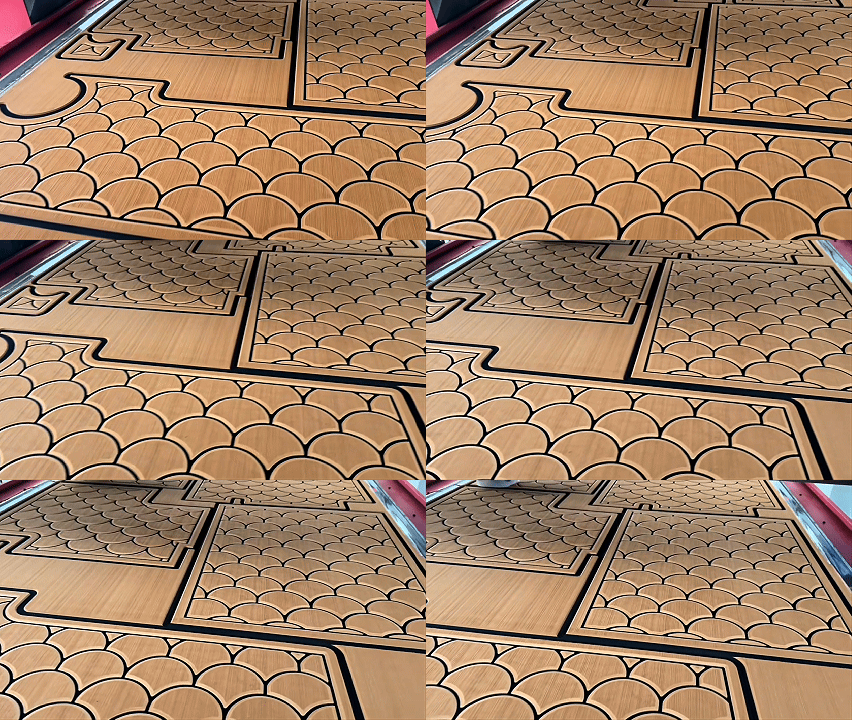
Aesthetics: Highly recognizable, breaking the monotony of traditional patterns and making the boat interior more distinctive. Light and bright colors (such as light blue, off-white, and light gray) combined with the fish scale pattern create a fresh and relaxing atmosphere, giving a relaxed and comfortable feeling.
Anti-slip effect: Moderate anti-slip performance. The overlapping fish scale design creates a slight textured feel while partially blocking seawater flow, reducing the risk of slipping.
Suitable boat types: Suitable for the cabin interiors and rest areas of small recreational boats, river cruise boats, lure fishing boats, and yacht leisure areas.
4. Hexagonal pattern: Grand and orderly, suitable for high-end boat types
The regular pattern formed by the splicing of hexagons has neat lines and an inherently high-end and refined temperament. The pattern has a strong three-dimensional effect, which can enhance the sense of layering of the boat’s interior, suitable for boat owners who pursue a high-end experience.
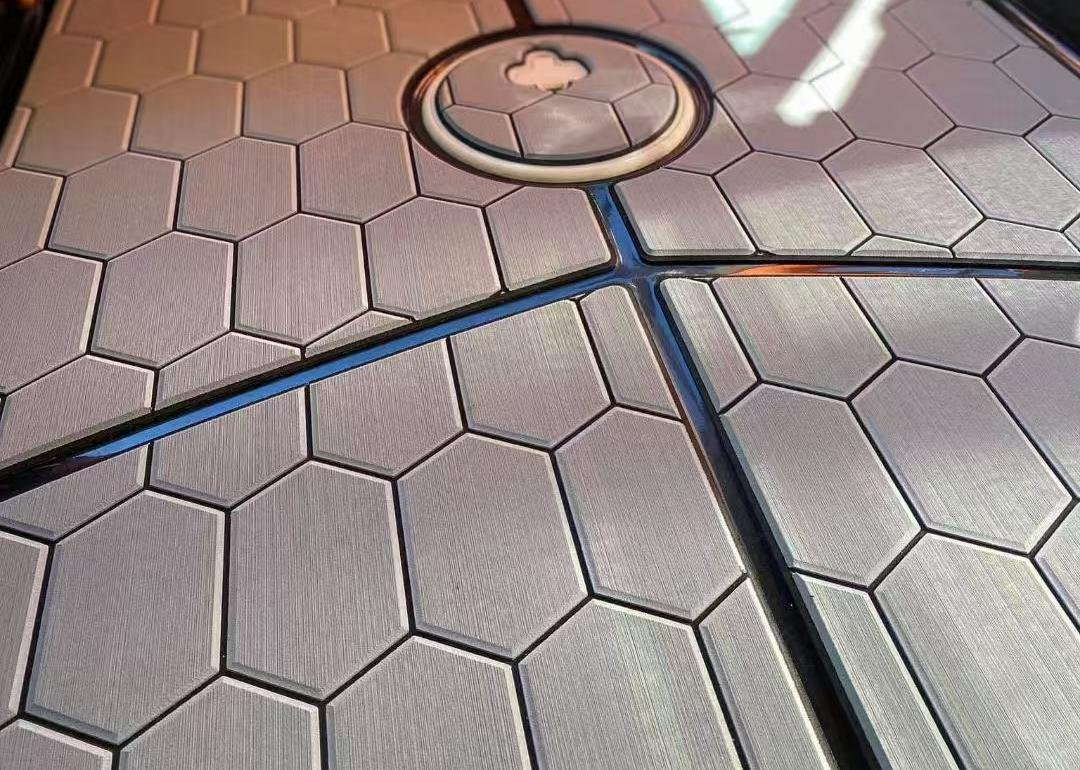
Aesthetics: Grand and orderly, with a strong sense of layering, the symmetrical hexagonal design creates a refined and high-end atmosphere. Dark and monochromatic colors (such as dark brown, black, and dark gray) combined with the hexagonal pattern further highlight the high-end texture of the boat, making the interior more design-oriented.
Anti-slip effect: Moderate anti-slip performance; the hexagonal seams create slight drainage channels, while the textured joints increase friction.
Suitable boat types: Primarily suitable for the cabin interiors, rest areas, and business meeting areas of high-end yachts, business cruise ships, and large leisure boats.
Step 3: Selection Tips, Avoiding Common Mistakes, and Balancing Durability and Practicality
Besides “determining the texture first, then the pattern,” when purchasing EVA boat flooring, we also need to pay attention to the following three points to avoid common selection mistakes and ensure the flooring’s durability and practicality.
1. Material Priority: Choose Marine-Grade EVA Material, Suitable for the Marine Environment
Boats are constantly exposed to seawater and sunlight. Ordinary EVA material is prone to aging, cracking, and fading. Marine-grade EVA material, however, has excellent resistance to seawater corrosion, UV rays, and aging. It is also environmentally friendly, non-toxic, and odorless, posing no harm to humans or the marine environment. In addition, marine-grade EVA material has a higher density and better wear resistance, and can withstand the friction and impact of fishing gear and equipment.
2. Thickness Fit: Choose According to Usage Area, Balancing Comfort and Durability
EVA boat flooring thickness varies, resulting in different levels of comfort and durability. The appropriate thickness should be chosen based on the usage area: 4-6mm thickness is suitable for rest areas and cabin interiors, balancing comfort and lightness; 8-10mm thickness is recommended for deck areas, passageways, and high-traffic areas, offering greater wear resistance and impact resistance, able to withstand frequent foot traffic and equipment friction. It’s important to note that thicker isn’t always better; excessively thick flooring increases the burden on the boat.
3. Avoiding Common Mistakes: Don’t Blindly Pursue Niche Patterns and Neglect Installation Details
Many boat owners blindly pursue niche, unique patterns, unaware that these patterns are not only more expensive but also more prone to showing dirt and difficult to clean, significantly diminishing their aesthetic appeal over time. We recommend prioritizing classic patterns such as faux teak and diamond patterns, which combine aesthetics, practicality, and ease of cleaning. At the same time, installation details should not be overlooked. Before installation, the boat’s ground must be cleaned to ensure that the ground is flat and dry, which will improve the fit of the floor and extend its service life.
Summary: Choose according to your needs, achieving a balance between aesthetics and practicality
The core principle for selecting EVA boat flooring is “determine the texture first, then choose the pattern.” The texture determines slip resistance and durability, while the pattern determines the aesthetics and the boat’s overall character. Combining this with details such as material and thickness will easily help you choose a suitable product.
By matching the usage scenario of your boat type and your personal preferences, and considering slip resistance, durability, and ease of maintenance, EVA boat flooring can both enhance the boat’s appearance and ensure navigational safety. After all, for ships, safety and practicality are always paramount.